PTFE Tube
  • PTFE Tube PTFE Tube

PTFE Tube

PTFE tube (also called PTFE tubing) is a hollow cylindrical product made from virgin or filled polytetrafluoroethylene. It combines near-universal chemical resistance, a working temperature range of −190 °C to +260 °C, one of the lowest friction coefficients of any solid material and FDA food-contact approval. This makes it the standard choice for chemical transfer lines, electrical insulation sleeves, food and pharmaceutical transfer, pneumatic and hydraulic lines, laboratory equipment and vibration-damping applications. Kaxite supplies extruded PTFE tube up to 120 mm outer diameter and moulded tube up to approximately 3000 mm, in virgin PTFE or filled grades (carbon, graphite, glass and other additives).

Send Inquiry

Product Description

PTFE Tube — Virgin & Filled PTFE Tubing Specifications, Sizes & Properties

The PTFE tube — also called PTFE tubing — is a hollow cylindrical product made from virgin or filled polytetrafluoroethylene. It combines near-universal chemical resistance, a working temperature range of −190 °C to +260 °C, one of the lowest friction coefficients of any solid material and FDA food-contact approval. This makes it the standard choice for chemical transfer lines, electrical insulation sleeves, food and pharmaceutical transfer, pneumatic and hydraulic lines, laboratory equipment and vibration-damping applications. We supply extruded PTFE tube up to 120 mm outer diameter and isostatically moulded tube up to approximately 3000 mm, in virgin PTFE or filled grades.

−190~260 °C Working Range
120 mm Max Extruded OD
<0.01% Water Absorption
UL94V0 Flame Rating

01How PTFE Tubes Are Made — Extrusion and Isostatic Moulding

The production method decides the maximum diameter, the maximum length and the dimensional accuracy of the tube. Kaxite uses two processes, chosen by the size you need.

Extrusion

Outer diameter up to 120 mm

Standard extruded lengths of 1000 mm, 2000 mm and 3000 mm. Extrusion gives a smooth bore, tight wall thickness tolerance and the best surface finish for small to medium diameters. This is the standard production method for the majority of tubing sizes.

Isostatic Moulding

Outer diameter up to approximately 3000 mm

Larger diameters are isostatically moulded. Maximum length depends on diameter and typically ranges from 100 mm to 300 mm. Because the mould can be shaped close to the final required dimension, this process reaches the closest diameter near the final size and can result in significant material saving.

Materials. Virgin PTFE tube is 100% PTFE and offers the best chemical resistance and dielectric properties. Filled PTFE tube contains additives such as carbon, graphite or glass to improve specific properties — for example, carbon and graphite improve wear resistance and thermal conductivity, glass improves compressive strength and reduces deformation under load.

02Key Properties of PTFE That Matter to Your Application

The properties below are what make PTFE tubing the default choice in chemical, food, electrical and equipment applications. Each property is listed with the reason it matters on the shop floor.

  • Excellent chemical resistanceNear-universal resistance to acids, alkalis, solvents and oxidisers — the tubing does not corrode, swell or contaminate the medium.
  • Working temperature −190 to +260 °CHandles cryogenic service and high-temperature process lines where most other plastics soften or become brittle.
  • Greatest resistance to fatigueMeasured on the Wöhler curve — the tube resists repeated flexing and pressure cycles without cracking.
  • FDA approvedVirgin PTFE tube is approved for food contact — suitable for food and pharmaceutical transfer lines.
  • Flame resistant — UL94V0Self-extinguishing under the UL94V0 standard — important for electrical and equipment applications.
  • Non-stick surfaceDeposits and residue do not build up on the bore — the tube stays clean and free-flowing over time.
  • Low frictionOne of the lowest friction coefficients of any solid material — ideal for pneumatic and hydraulic lines and for moving parts.
  • UV-resistant — does not ageOutdoor service does not degrade the tube — no yellowing, cracking or loss of properties from sunlight.
  • Not hygroscopicWater absorption below 0.01% — dimensions and dielectric properties stay stable in humid or wet environments.
  • Very good dielectric insulationHigh dielectric strength and low dielectric loss — a standard choice for electrical and electronic insulation sleeves.
  • Excellent vibration dampingDamping is effective at both sonic and ultrasonic frequencies — used to isolate vibration in equipment.
  • Improves with fillersCarbon, graphite, glass and other additives can improve wear, creep, thermal conductivity and compressive strength.

03Virgin PTFE vs Filled PTFE — Which Tube Do You Need?

Both grades are made from the same base polymer. The difference is the additive, which changes the mechanical and thermal behaviour. Use the table below to match the grade to your application.

Property Virgin PTFE Filled PTFE (Carbon / Graphite / Glass)
Chemical resistance Best — full PTFE resistance to pH 0–14 Good, but slightly reduced by the filler
Dielectric insulation Best Reduced, especially with carbon and graphite
Wear resistance Moderate Improved by carbon and graphite
Thermal conductivity Low Improved by carbon and graphite
Compressive strength Moderate Improved by glass
Creep / cold flow Higher under load Reduced by fillers
Food contact FDA approved Grade dependent — confirm with your supplier

04Typical Applications of PTFE Tubing

PTFE tubing is specified where chemical resistance, temperature range and cleanliness matter more than mechanical strength or cost.

  • Chemical transfer lines
  • Electrical insulation sleeves
  • Food and pharmaceutical transfer
  • Pneumatic and hydraulic lines
  • Laboratory equipment
  • Vibration damping in equipment
  • Analytical instrument tubing
  • Semiconductor wet bench lines
  • Fuel and oil lines
  • Medical and dental tubing

05Product Images

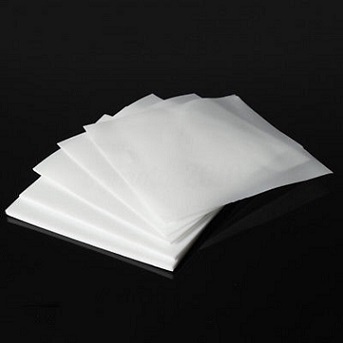
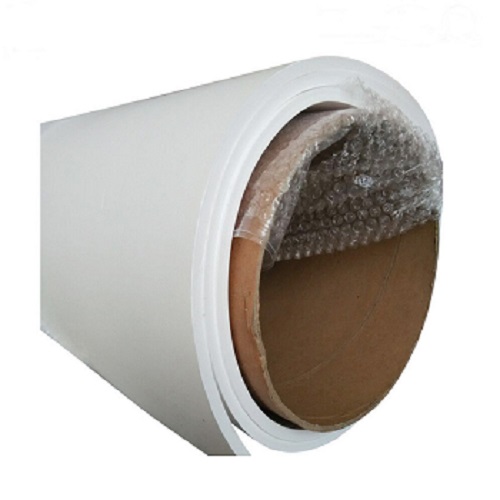
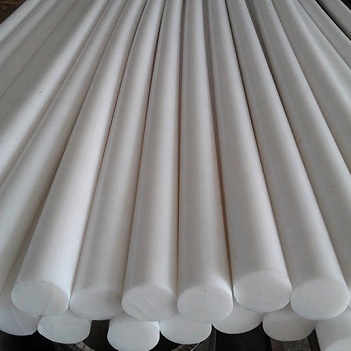
PTFE tube extruded and moulded in virgin and filled grades
PTFE tube — extruded and moulded grades
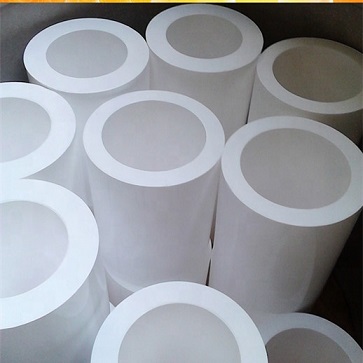
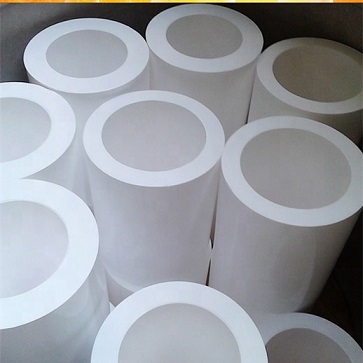
PTFE tubing for chemical transfer, electrical insulation and laboratory service
PTFE tubing for industrial and laboratory service

06How to Order the Correct PTFE Tube

  1. Confirm the outer diameter and inner diameter. These fix the wall thickness and decide whether extrusion (up to 120 mm OD) or moulding (larger) is required.
  2. Choose virgin or filled PTFE. Virgin for chemical and dielectric service; filled (carbon, graphite or glass) when wear, creep or thermal conductivity matter more.
  3. Choose the length. Standard extruded lengths are 1000, 2000 and 3000 mm; moulded lengths are typically 100–300 mm and depend on diameter.
  4. Tell us the medium and temperature. This confirms whether virgin or filled PTFE is required and whether FDA approval is needed.
  5. Confirm food or electrical requirements. FDA and UL94V0 apply to virgin PTFE tube — confirm before ordering if the tube must carry either approval.

07Why Buy PTFE Tubes from Kaxite

  • Direct manufacturer. Ningbo Kaxite Sealing Materials Co., Ltd produces PTFE tube at its own facility in Zhenhai District, Ningbo, Zhejiang, China — factory-direct supply without trading-company mark-up.
  • Both extrusion and isostatic moulding in-house. Extruded tube up to 120 mm OD and moulded tube up to approximately 3000 mm, so you do not need two suppliers for a mixed order.
  • Virgin and filled grades. Carbon, graphite and glass filled PTFE available alongside virgin PTFE, so you can match the grade to the mechanical demand.
  • FDA and UL94V0 verified. Virgin PTFE tube meets FDA food-contact requirements and is flame resistant to UL94V0.
  • Traceable materials. Material test certificates can be provided on request so your QA department can verify grade and properties.
  • Export packing. Individually wrapped and packed in cases to protect the bore and the outer surface during sea freight.

08Frequently Asked Questions

Q

What is a PTFE tube used for?

PTFE tube is used for chemical transfer lines, electrical insulation sleeves, food and pharmaceutical transfer, pneumatic and hydraulic lines, laboratory equipment and vibration damping in equipment. It combines near-universal chemical resistance, a working temperature range of −190 °C to +260 °C, FDA food-contact approval, low friction and excellent dielectric insulation properties.

Q

What is the maximum diameter and length of a PTFE tube?

Extruded PTFE tube is available up to 120 mm outer diameter in standard lengths of 1000 mm, 2000 mm and 3000 mm. Larger diameters up to approximately 3000 mm are isostatically moulded. For moulded tube, the maximum length depends on the diameter and typically ranges from 100 mm to 300 mm. Custom sizes are made to drawing.

Q

What is the working temperature of a PTFE tube?

PTFE tube works from −190 °C to +260 °C. This makes it suitable for cryogenic service and for high-temperature chemical and process lines where most other plastics would soften or become brittle.

Q

What is the difference between virgin PTFE and filled PTFE tube?

Virgin PTFE tube is 100% PTFE and offers the best chemical resistance and dielectric properties. Filled PTFE tube contains additives such as carbon, graphite or glass to improve specific properties: carbon and graphite improve wear resistance and thermal conductivity, glass improves compressive strength and reduces deformation under load. Choose virgin PTFE when chemical resistance is the priority, and filled PTFE when mechanical strength or thermal conductivity matters more.

Q

Is PTFE tube FDA approved and flame resistant?

Yes. Virgin PTFE tube is FDA approved for food contact and is flame resistant to UL94V0. It is also non-hygroscopic, with water absorption below 0.01%, and UV-resistant, so it does not age in outdoor service.

Q

Can PTFE tube be customised to my specification?

Yes. Send your drawing or specification with outer diameter, inner diameter, wall thickness, length, material grade (virgin or filled) and quantity, and Kaxite will produce the PTFE tube to your exact requirements.

09Warning

PTFE tube should be selected by a qualified engineer based on the actual medium, temperature, pressure and mechanical load. The property data shown is typical and is provided for reference only. No application should be undertaken without independent study and evaluation for suitability. PTFE has a low mechanical strength compared with metals and a higher thermal expansion rate — the tube should not be used as a structural component without independent design verification. The information and specifications contained in this website are subject to change without notice. This revision cancels and obsoletes all previous editions.

Page reviewed and updated by the Kaxite technical team · Rev. 2026-01 · Ningbo Kaxite Sealing Materials Co., Ltd, No. 432, Zhenhai Middle Road, Luotuo Street, Zhenhai District, Ningbo City, Zhejiang, China.
Related Category

Send Inquiry

Please Feel free to give your inquiry in the form below. We will reply you in 24 hours.
X
We use cookies to offer you a better browsing experience, analyze site traffic and personalize content. By using this site, you agree to our use of cookies. Privacy Policy
Reject Accept